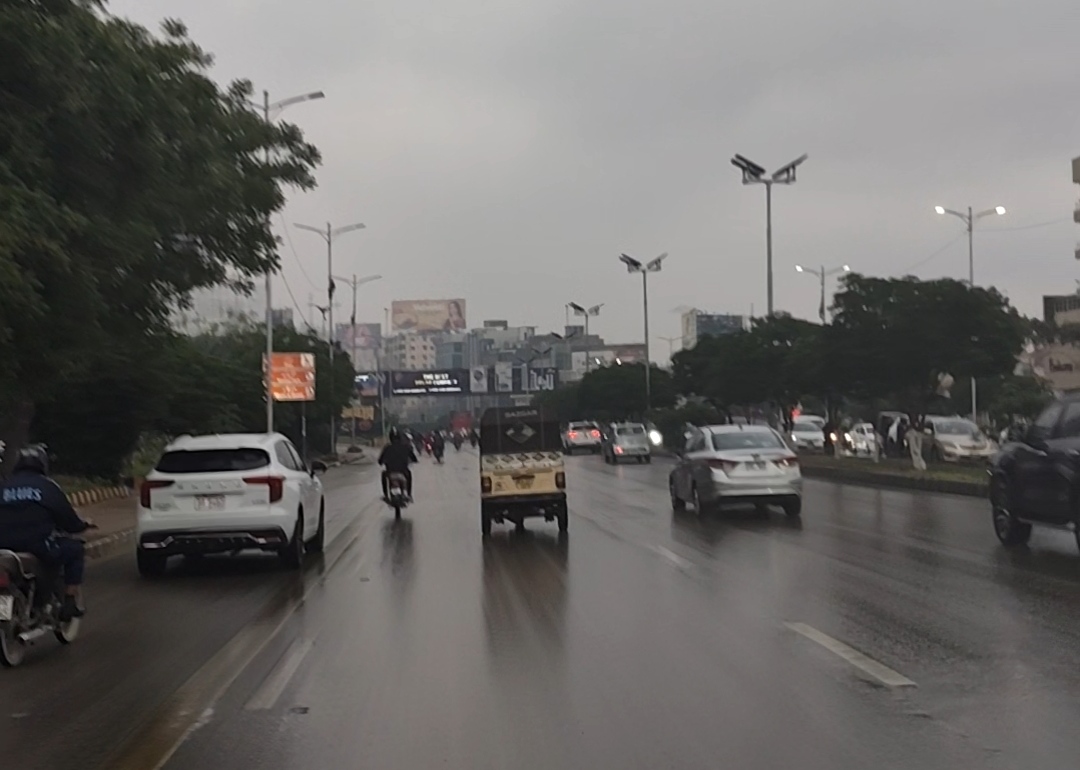
A fresh spell of rain swept across Karachi on Thursday, as a strong westerly weather system moved into southern Pakistan, bringing much-needed relief from rising temperatures but also exposing the city’s fragile urban infrastructure.
According to the Pakistan Meteorological Department, rainfall was recorded in several parts of the city early in the morning, including Quaidabad, Malir, PAF Faisal Base, and Jinnah Terminal. Light showers continued in areas like Gulshan-i-Maymar, while heavier downpours lashed Gulistan-i-Jauhar, Saddar, Clifton, Garden, and Keamari.
Weather radar imagery indicated intense rainfall over northern parts of the city, accompanied by isolated hail — a relatively rare occurrence for Karachi. The department forecast a maximum temperature between 25°C and 27°C, with cloudy skies, strong winds, and intermittent thundershowers expected to persist throughout the day.
A Double-Edged Blessing
While the rain brought temporary relief from heat and improved air quality, it also highlighted Karachi’s long-standing urban vulnerabilities. Water accumulation on key roads once again disrupted traffic flow, reflecting persistent drainage issues in the metropolitan city.
Experts often point out that unplanned urban expansion, clogged stormwater drains, and inadequate waste management systems worsen the impact of seasonal rains. Even moderate rainfall can lead to localized flooding, affecting daily life and economic activity.
Emergency Response Activated
In response to the ongoing weather situation, city authorities declared a rain emergency across Karachi. Commissioner Syed Hassan Naqvi announced that all relevant departments had been mobilized to manage the situation.
Emergency teams from the water corporation, town administrations, and the solid waste management board were deployed across affected areas. Heavy machinery and vehicles were sent to clear accumulated rainwater, particularly from low-lying roads and intersections.
Citizens were advised to contact the official helpline (1299) for assistance, while deputy commissioners and field officers were instructed to remain on high alert.
Relief Camps and Field Operations
To ensure timely response, multiple emergency help desks and camps were set up across districts. In District East, key locations such as Nursery, Nipa Chowrangi, National Stadium, and Sohrab Goth were designated as response points. Meanwhile, in District South, facilities were established along MA Jinnah Road, Shaheen Complex, and Lyari.
Authorities stated that teams are actively working on water drainage, traffic management, and addressing public complaints, aiming to minimize disruption during the ongoing spell of rain.
The Bigger Picture
Karachi’s recurring struggle during monsoon and pre-monsoon rains underscores the urgent need for sustainable urban planning. As climate patterns become increasingly unpredictable, cities like Karachi must invest in resilient infrastructure, efficient drainage systems, and better waste management practices.
Rain, while essential for ecological balance, continues to test the limits of the city’s preparedness — raising an important question: can Karachi transform seasonal challenges into an opportunity for long-term environmental reform?